 Pergolas
 My custom quote
 Confirm my order
 Our customer projects
 Our blog articles
 Installation guides
 Your testimonials
 CliKIT on TV
 Carports
 Our price guides
 Kit Verandas
 Entry Airlock

 Awnings & Covers
 Glass Curtains
 Skylight
 Who are we?
 Free delivery
 Secure payment
 My custom quote
 Confirm my order
 Our customer projects
 Our price guides
 Our blog articles
 Installation guides
 Your testimonials
 CliKIT on TV
Pergola: Definition, uses and advice before buying
Is it really made for you? The pergola continues to charm you and you can easily picture it in your garden. Its sturdy structure and its ability to protect you from all weather conditions speak for themselves, but you don't yet have all the answers to your questions to take the plunge and buy a pergola. Design, dimensions and assembly — CliKIT provides the keys so that the pergola holds no more secrets for those who may soon become its proud owners.
What is a pergola?
As the concept has evolved over time, the definition of a pergola is not always the same everywhere. As a specialist in the field and even in custom-made solutions, CliKIT cuts to the chase and explains what a pergola is. From its nuances to its particularities depending on the models, we leave nothing out, ensuring that you too become a reference point when it comes to explaining the very concept of these outdoor structures.
A simple and clear definition
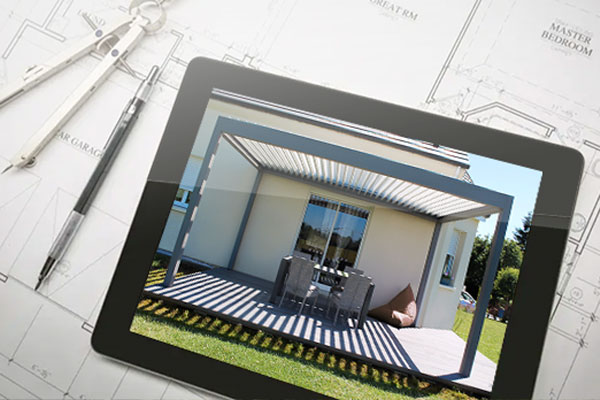
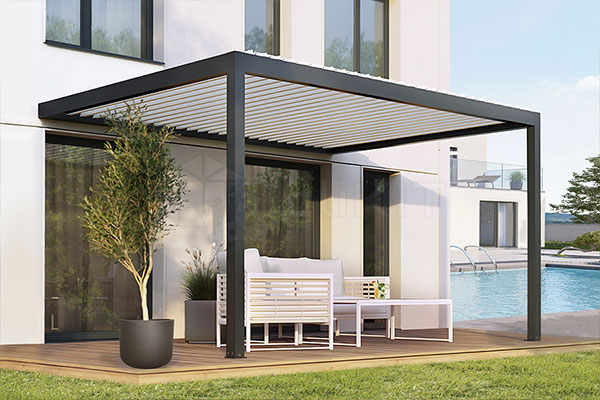
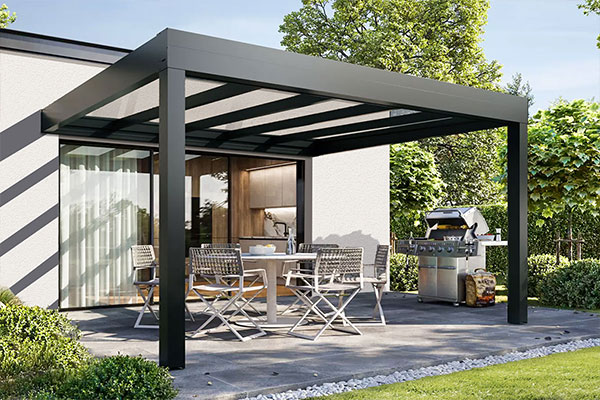
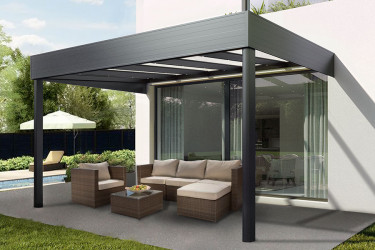
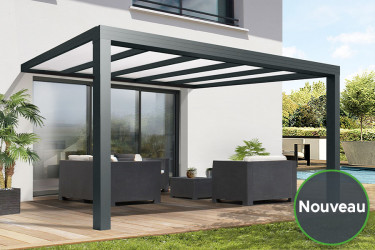
You may be looking for the definition of a pergola or the answer to the famous question: what is a pergola? Between group discussions and the curiosity of homeowners, these questions come up frequently. Simply put, a pergola is a freestanding or wall-mounted structure attached to an exterior wall that provides a space sheltered from the elements or from the sun.
Thanks to its versatility and particularly in its modern aluminium form, the pergola can be considered an additional room between the interior and exterior of the home.
This is the case when you want to enclose your pergola using various accessories and thus continue to master the elements so you can enjoy this space in any weather and at any time of day or night.
The main types of pergolas
In recent years, the general appetite of homeowners for improving their properties has expanded the range of possibilities. This is largely why pergola models and types are evolving under the impetus of consumer demand. A major advantage when you trust a custom kit specialist like CliKIT, but also yet another reason to embark on the challenging choice between a classic pergola and a bioclimatic pergola.
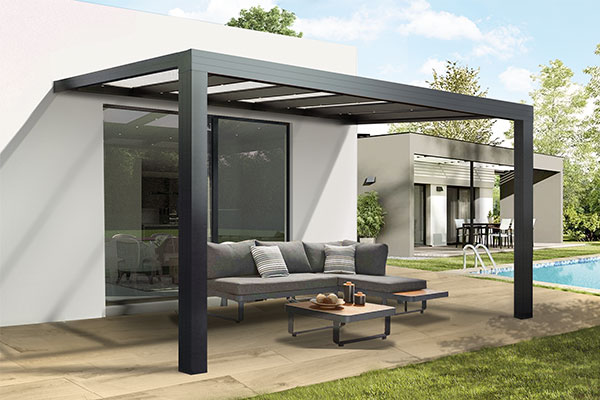
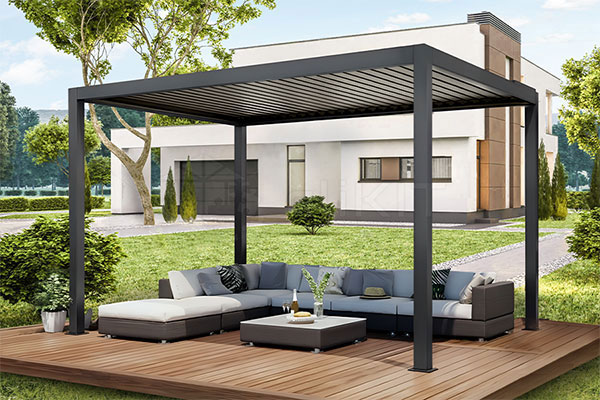
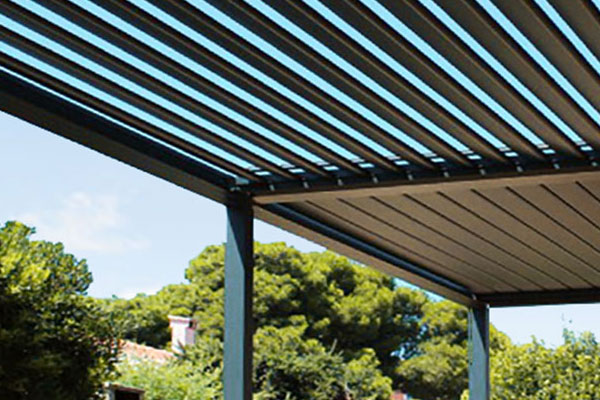
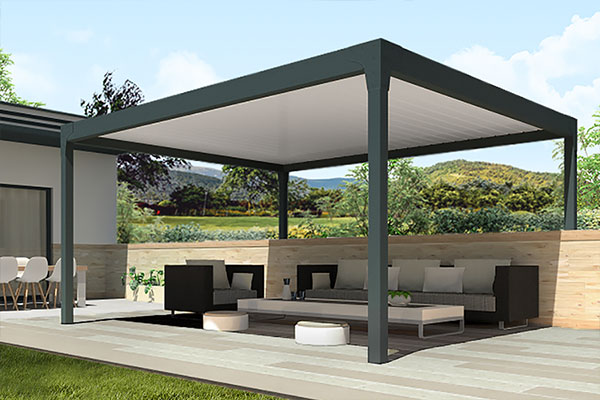
At CliKIT, the two main families of pergolas on offer are both compatible with accessories and personal preferences, but generally speaking, a classic aluminium pergola will have a fixed or removable cover, but never adjustable louvres. That is where the difference lies and where the bioclimatic pergola comes into play. With adjustable polycarbonate louvres that can adapt to your preferences and, for example, to sunlight, this type of structure gains even more versatility.
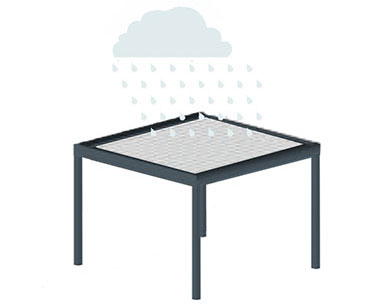 Louvres closed to protect against bad weather (rain, snow, etc.)
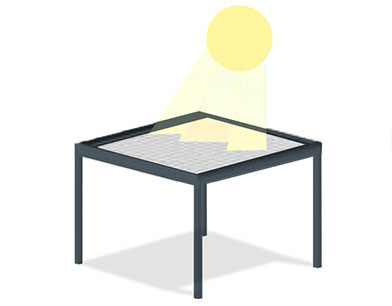 Louvres closed to shield against UV rays from the sun
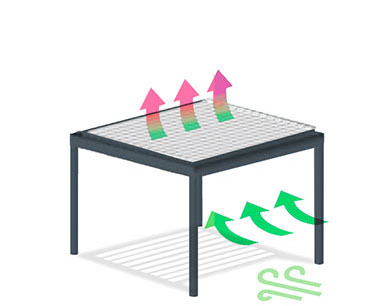 Louvres open to enjoy the sun with optimal ventilation
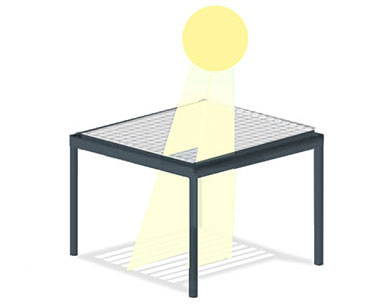 Louvres ajar for natural ventilation while regulating light levels
With a bioclimatic pergola, you can instantly respond to weather conditions and "play" with the orientation or full closure of the roof. An additional advantage if you want to enjoy your outdoor space all year round and even counter the arrival of rain or intense summer sun.
What is the difference between a conservatory and a pergola?
Both structures have their respective advantages but the distinction remains important. You should not be mistaken when trying to understand the difference between a conservatory and a pergola! Although they share some similarities, these two outdoor installations each have their own characteristics that make them unique.
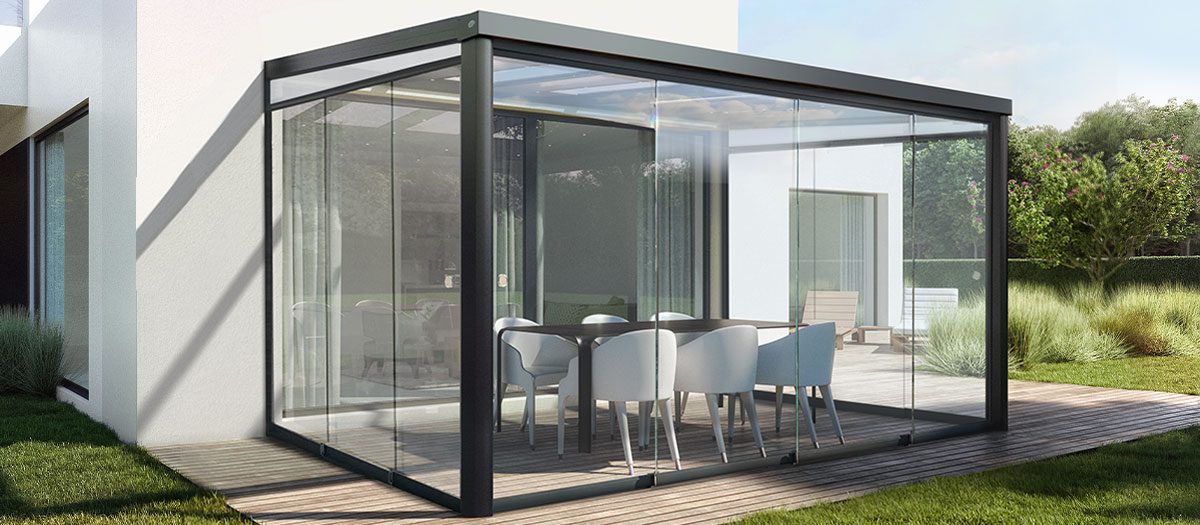
By definition, a conservatory is a closed structure and necessarily attached to the house. You can choose to heat it or not in winter, but it will always be enclosed on all its sides and, above all, its roof. A pergola can become enclosed and resemble a true conservatory, but at its core it remains an opening to the outside, with for example the possibility of fully orienting the louvres of a bioclimatic pergola to let in air and light.
More oriented towards the outdoors, the pergola remains more versatile than a conservatory, even more so when adding accessories designed to enclose your pergola or transform it into a winter garden.
What is the difference between a gazebo and a pergola?
Without any slander intended, it remains important to point out that you shouldn't mix apples and oranges! A gazebo has saved many a gathering and always provides good and loyal service. Exceptional service, however. Indeed, a gazebo is never installed on a permanent basis and although it is more elegant than a simple parasol, it will never have the rigidity or durability of a pergola.
Its price is of course not the same, but whereas a gazebo is a shelter for one or a few days, a pergola is a structure that offers far better protection against all weather conditions and, above all, provides superior versatility to its users all year round, with the added bonus of a lifespan measured in decades.
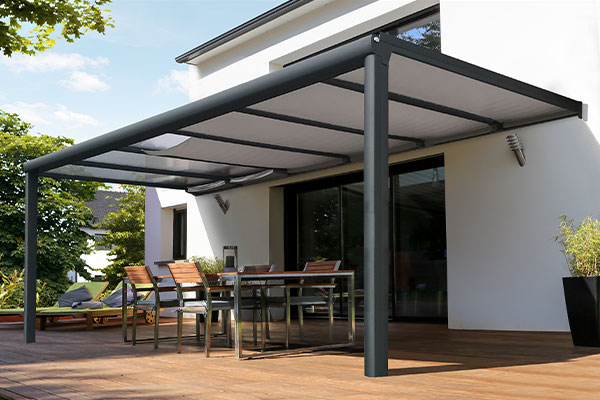
What materials should you choose for a pergola?
The pergola has evolved greatly over the ages and, just like the architecture and materials used to build our homes, the pergola of yesterday is not necessarily the same as today. The choice, however, remains personal, depending on availability and the models offered by sellers, with CliKIT leading the way. You will find classic and traditional styles, but above all contemporary and robust ones. With the advantages and disadvantages of the different materials available for a pergola, we help you choose the one that is right for you and your home.
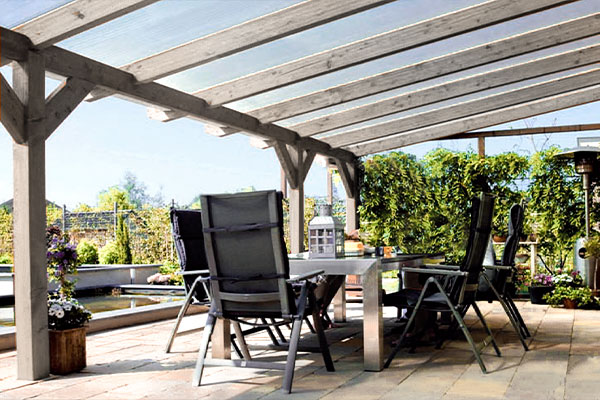
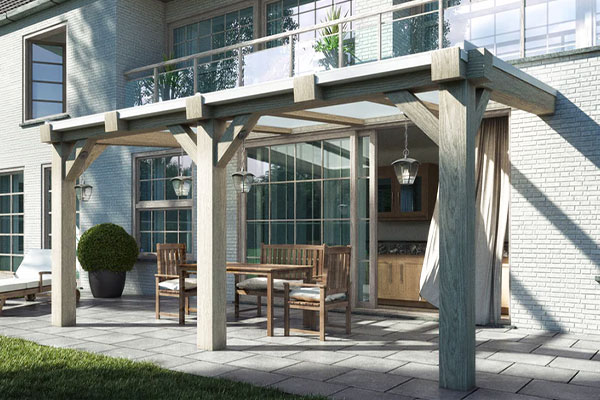
Wood: Natural charm and robustness
The timeless classic that has stood the test of time and continues to win over purists. A wooden pergola requires meticulous and regular maintenance if you want the structure to last, but beyond this drawback — not to be underestimated — it is impossible not to admire the charm brought by a wooden pergola structure. Much like a wooden carport for parking your car.
Aluminium: Modernity and lightness
The ultimate material for a pergola, aluminium combines every conceivable strength. Lightweight, modern and durable, aluminium requires very little maintenance and above all has the benefit of adapting to all architectural styles. The result is always a success!
Steel: Strength and elegance
No doubt about it, the pergola won't budge! Steel is sometimes used for the construction of pergolas and although the result looks good on contemporary homes, the slightest hint of corrosion must be monitored.
PVC: Economical and practical option
Accessible and budget-friendly, PVC often gives DIY enthusiasts ideas. It is economical, practical and easy to source. However, these advantages should not overshadow its low heat resistance and sometimes insufficient strength when used on a pergola.
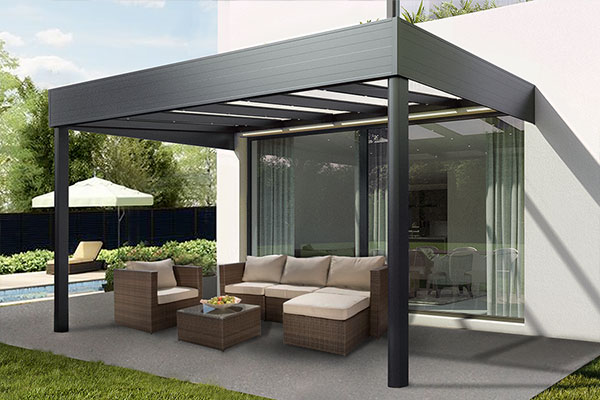
Which pergola should you choose based on your needs?
Between the material, the surface area and the exact location where you want to enjoy this haven of peace that your future pergola will be, several options are available to you. Here are some examples with specific scenarios.
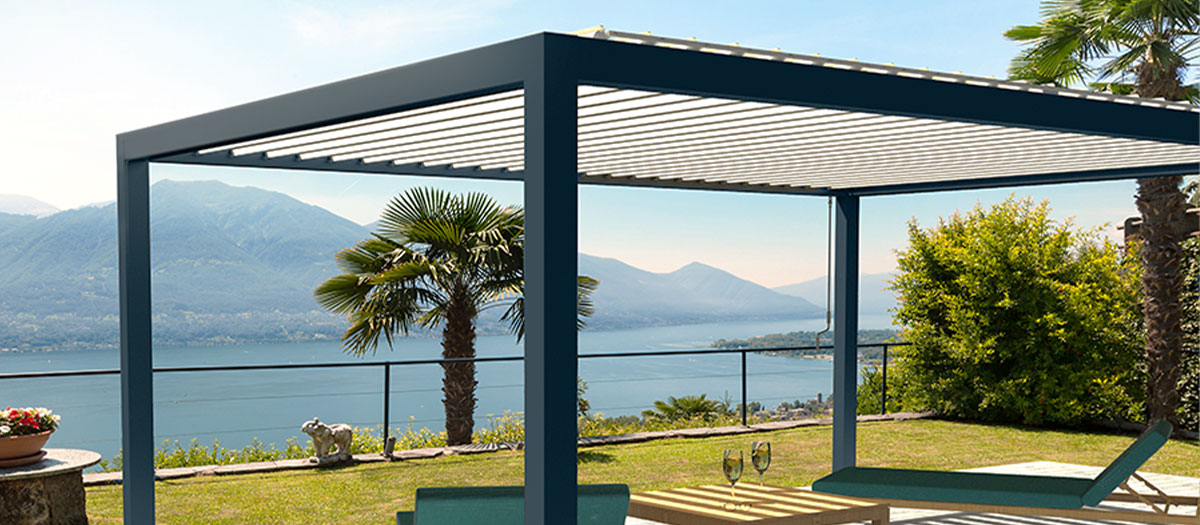
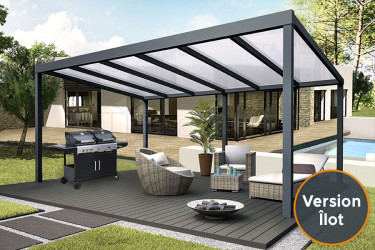
For a spacious garden: Go for a freestanding pergola
Why hold back when space is not an issue? With a large garden and a house that enjoys a vast and leafy setting, a freestanding pergola hits the mark! It can enhance a terrace that lacks character or fill an empty space on an existing slab or area.
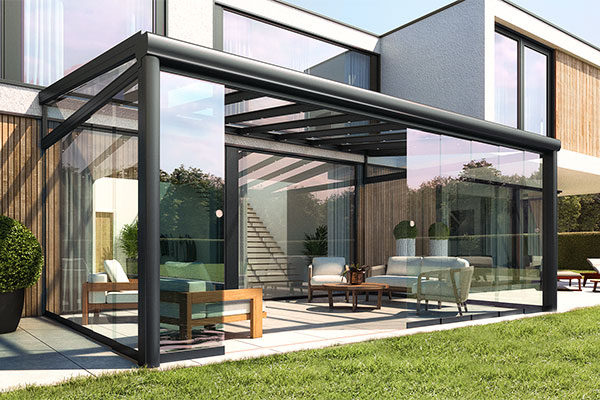
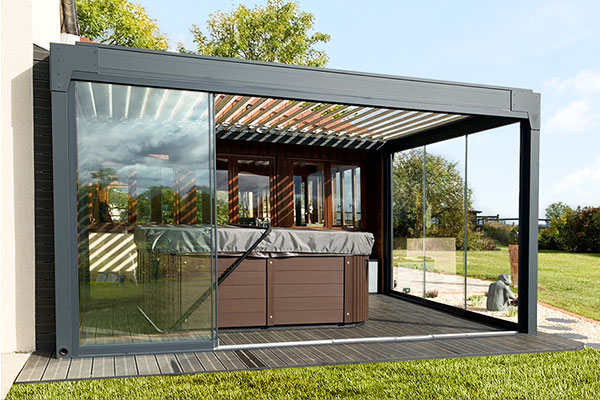
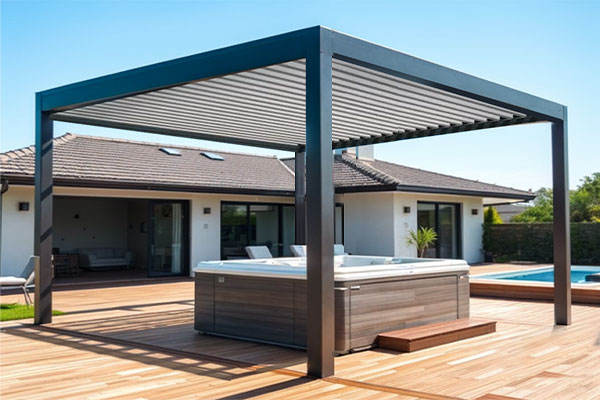
For a small terrace: Opt for a wall-mounted pergola
Creating a cosy space has an undeniable charm and, above all, provides a place where you feel at ease. A wall-mounted pergola is the perfect solution for a space between indoors and outdoors. On a small terrace, next to a spa or a swimming pool, the wall-mounted pergola combines all the advantages of a conservatory without the drawbacks!
For optimal comfort: The bioclimatic pergola
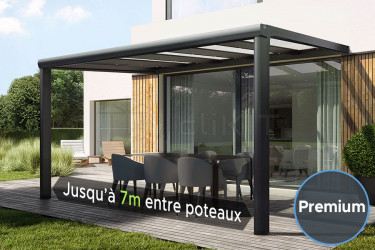
Even before considering whether to attach your pergola to a wall or not, you will likely only have eyes for the bioclimatic version. Designed for all four seasons and all weather conditions, the bioclimatic pergola is the Rolls-Royce of outdoor installations, thanks to its adjustable louvres and aluminium structure.
How do you install a pergola?
Save money and enjoy the DIY experience? That's exactly what CliKIT offers with its kit and custom-made pergolas.
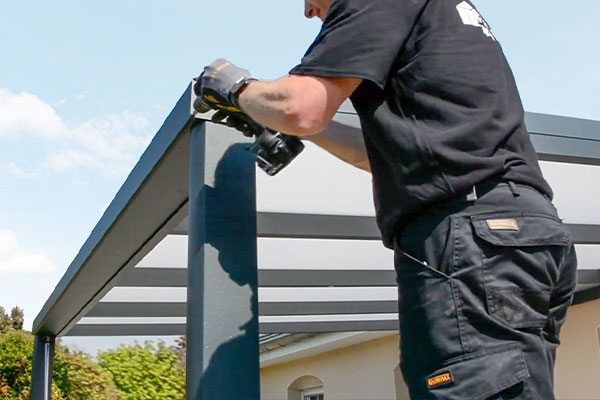
Installing a pergola is much simpler than you might think with another person, a bit of elbow grease, and the reassurance of following the installation guides and videos provided by CliKIT. Make sure you have all the necessary tools at hand and take the time to read the assembly instructions carefully. Installing a pergola is a project that can generally be completed in a single day.
If you run into any issues, no problem: the customer service team will support and guide you. After a few hours, it will already be time to enjoy your aluminium pergola.
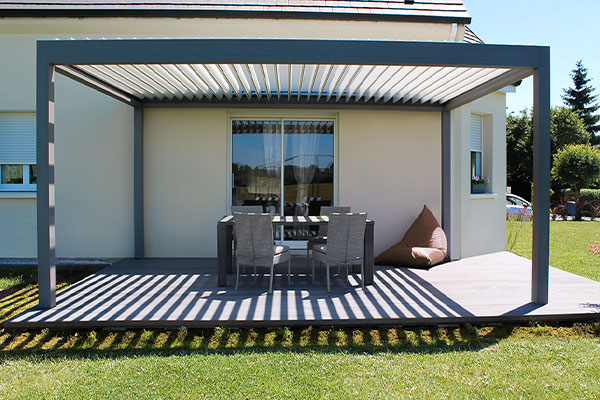
What are the advantages of a pergola for your outdoor space?
You may find it just as hard to identify a potential drawback of a pergola as it is to list all of its advantages! Adaptability to weather conditions, endless versatility, unlimited personalisation, timeless charm and robustness are among the advantages of a pergola. Your outdoor space is just waiting for one.
Discover all the accessories to upgrade your pergola!
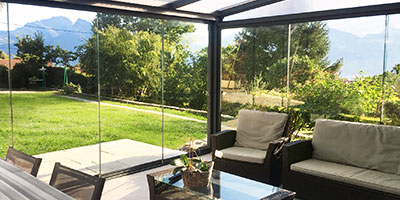 Glass Curtains
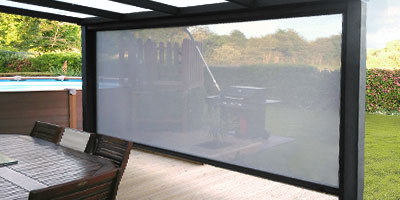 Awnings & Shade Sails
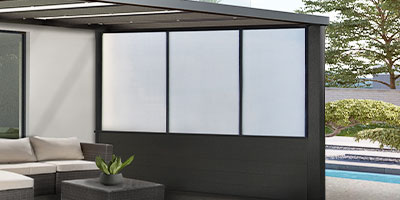 Side Panels
How much does a pergola cost?
Thanks to a flagship catalogue and a wealth of options, the pergola is accessible for every budget. Check out our guide on how much a pergola costs to get an idea and refine your selection. Prices generally range from €200 to €800 per m² depending on the model and options chosen.
Do you need planning permission to install a pergola?
Installing a pergola does not always require planning permission, but this depends on its size and location. If your pergola is freestanding and under 20 m², a simple prior declaration of works submitted to your local authority may be sufficient. On the other hand, for a wall-mounted pergola exceeding this area, a building permit will be required.
Before starting your project, it is therefore essential to consult the LUP (Local Urban Planning) scheme of your local authority to avoid any unpleasant surprises. Certain areas, particularly protected ones, may have specific regulations that must be complied with.
What accessories and options are available to personalise your pergola?
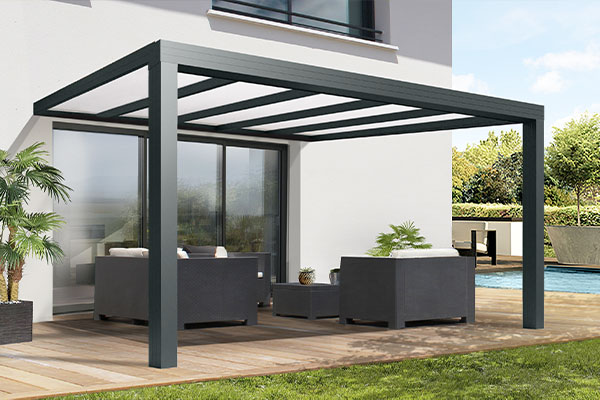
We are convinced that pergolas hold no more secrets for you. And if you are still hesitating to take the plunge, the versatility of CliKIT pergolas should ultimately win you over. The accessories and options made available to personalise your pergola are like a true treasure trove.
Several products compatible with CliKIT pergolas are available:
- Manual awnings or motorised awnings
- Shade sails
- Lighting kits
- Pergola heating
- Pergola panels
- Glass curtains to enclose your pergola
- And many more...
Add to that the various choices in the design and manufacturing of your pergola, and you have every justification for your next favourite space at home.
Share this content

 View profile